




Opening the Quran for the very first time can feel incredibly overwhelming. If you are a busy adult looking at the Arabic text, the unfamiliar formatting, and the dense pages, it is completely normal to feel a bit lost. You are definitely not alone in this experience.
For many Muslims and spiritual seekers living in English-speaking countries, the desire to connect with the text is strong, but the structural layout creates an immediate hurdle. It does not read chronologically like a standard novel, and the traditional terminology can seem like a barrier to entry.
You do not need an advanced academic degree to understand how this beautiful book is organized. What you need is a simple, stress-free map. As your friendly mentors at Quran in Universe, we are here to walk you through the layout step-by-step.
By the end of this guide, you will know exactly how to navigate the chapters and verses with confidence. Let’s break down the structure of the Quran in clear, everyday English, without any confusing jargon or judgment.
What is the Quran? (Understanding the Noble Al Quran)
At its core, the Quran is the central religious text of Islam. Muslims believe it is the literal, direct word of Allah (God), revealed to Prophet Muhammad (peace be upon him) through the Angel Jibreel (Gabriel). It serves as a complete, practical guide for human life, offering clear instructions on:
- Personal spirituality and finding inner peace
- Family dynamics and healthy relationships
- Business ethics and fair financial practices
- Community building and social justice
When you hold a physical copy of the noble al quran, you are holding a text that was revealed over a period of 23 years. Because the revelations came down in response to specific events, challenges, and questions faced by the early Muslim community, the final book is not arranged in the order of time.
Instead of a timeline of historical events, the Quran is organized by theme, spiritual weight, and divine instruction. This unique arrangement encourages readers to reflect deeply on the messages rather than just reading it as a history book. It is a living conversation between the Creator and humanity.
For English speakers, starting with a clear, modern translation is a wonderful way to grasp this overarching message. The goal is to build a lifelong relationship with the book, and understanding its basic framework is your very first step.
Surahs vs. Ayahs: The Basics of Chapters and Verses
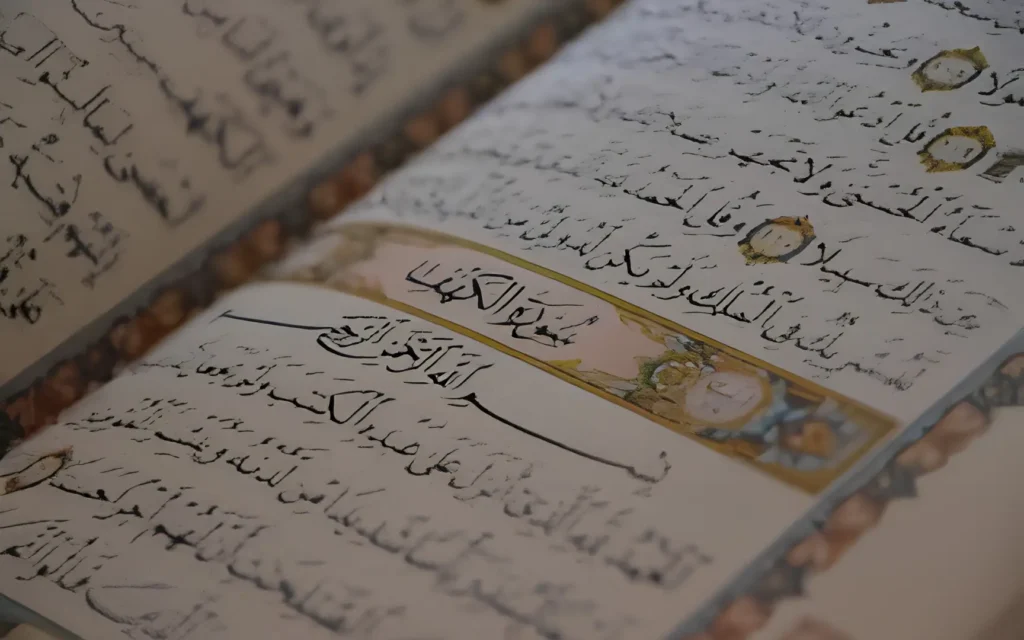
If you are wondering exactly how many surahs are in the quran, the answer is precisely 114. A “Surah” is simply the Arabic word for a chapter. Every single one of these 114 chapters, except for one, begins with the phrase Bismillah ir-Rahman ir-Rahim (In the name of God, the Most Gracious, the Most Merciful).
Inside each Surah, you will find individual sentences or phrases called “Ayahs.” An Ayah translates directly to a verse, but its literal meaning in Arabic is a “sign” or “miracle.” There are over 6,200 Ayahs in the entire text, carrying the profound messages and instructions of the faith.
When you look at the arrangement of the 114 chapters, you will notice a general pattern. After the opening chapter (Al-Fatiha), the book generally places the longest chapters at the beginning and the shortest chapters at the end. For example, the second chapter, Al-Baqarah, contains 286 verses and covers dozens of pages.
Conversely, as you reach the back of the book, you will find the shortest surah in quran, Surah Al-Kawthar. It contains only three short verses and takes just seconds to recite. This thoughtful structure makes it incredibly easy for beginners and children to start memorizing from the back of the book, building their confidence through quick wins.
To make things as clear as possible, here is a simple terminology breakdown:
Quick Quranic Terminology Map of Surahs, Ayah, Juz, & Mushaf
| Arabic Term | English Meaning | What It Actually Does in the Book |
| Surah | Chapter | Divides the book into 114 distinct, named sections. |
| Ayah | Verse | A single sentence or phrase within a chapter. |
| Juz / Para | Part / Section | Divides the entire book into 30 equal segments for easy reading. |
| Mushaf | The Physical Book | The bound, printed pages containing the Arabic text. |
| Tilawah | Recitation | The act of reading the text aloud with proper pronunciation. |
Complete List of All 114 Surahs
For easy reference, here is the complete chronological list of how the chapters appear in the physical book. Scanning this list is a great way to familiarize yourself with the names and their beautiful meanings.
| Surah No. | Name of Surah | English Meaning |
| 1 | Al-Fatiha | The Opening |
| 2 | Al-Baqarah | The Cow |
| 3 | Aal-Imran | The Family of Imran |
| 4 | An-Nisa | The Women |
| 5 | Al-Ma’idah | The Table Spread |
| 6 | Al-An’am | The Cattle |
| 7 | Al-A’raf | The Heights |
| 8 | Al-Anfal | The Spoils of War |
| 9 | At-Tawbah | The Repentance |
| 10 | Yunus | Jonah |
| 11 | Hud | Hud |
| 12 | Yusuf | Joseph |
| 13 | Ar-Ra’d | The Thunder |
| 14 | Ibrahim | Abraham |
| 15 | Al-Hijr | The Rocky Tract |
| 16 | An-Nahl | The Bee |
| 17 | Al-Isra | The Night Journey |
| 18 | Al-Kahf | The Cave |
| 19 | Maryam | Mary |
| 20 | Ta-Ha | Ta-Ha |
| 21 | Al-Anbiya | The Prophets |
| 22 | Al-Hajj | The Pilgrimage |
| 23 | Al-Mu’minun | The Believers |
| 24 | An-Nur | The Light |
| 25 | Al-Furqan | The Criterion |
| 26 | Ash-Shu’ara | The Poets |
| 27 | An-Naml | The Ants |
| 28 | Al-Qasas | The Stories |
| 29 | Al-Ankabut | The Spider |
| 30 | Ar-Rum | The Romans |
| 31 | Luqman | Luqman |
| 32 | As-Sajdah | The Prostration |
| 33 | Al-Ahzab | The Combined Forces |
| 34 | Saba | Sheba |
| 35 | Fatir | Originator |
| 36 | Ya-Sin | Ya Sin |
| 37 | As-Saffat | Those Ranged in Ranks |
| 38 | Sad | The Letter Sad |
| 39 | Az-Zumar | The Groups |
| 40 | Ghafir | The Forgiver |
| 41 | Fussilat | Explained in Detail |
| 42 | Ash-Shura | The Consultation |
| 43 | Az-Zukhruf | The Gold Adornments |
| 44 | Ad-Dukhan | The Smoke |
| 45 | Al-Jathiyah | The Kneeling |
| 46 | Al-Ahqaf | The Wind-Curved Sandhills |
| 47 | Muhammad | Muhammad |
| 48 | Al-Fath | The Victory |
| 49 | Al-Hujurat | The Rooms |
| 50 | Qaf | The Letter Qaf |
| 51 | Adh-Dhariyat | The Winnowing Winds |
| 52 | At-Tur | The Mount |
| 53 | An-Najm | The Star |
| 54 | Al-Qamar | The Moon |
| 55 | Ar-Rahman | The Beneficent |
| 56 | Al-Waqi’ah | The Inevitable |
| 57 | Al-Hadid | The Iron |
| 58 | Al-Mujadilah | The Pleading Woman |
| 59 | Al-Hashr | The Exile |
| 60 | Al-Mumtahanah | The Examined One |
| 61 | As-Saff | The Ranks |
| 62 | Al-Jumu’ah | Friday |
| 63 | Al-Munafiqun | The Hypocrites |
| 64 | At-Taghabun | Mutual Loss and Gain |
| 65 | At-Talaq | The Divorce |
| 66 | At-Tahrim | The Prohibition |
| 67 | Al-Mulk | The Sovereignty |
| 68 | Al-Qalam | The Pen |
| 69 | Al-Haqqah | The Reality |
| 70 | Al-Ma’arij | The Ascending Stairways |
| 71 | Nuh | Noah |
| 72 | Al-Jinn | The Jinn |
| 73 | Al-Muzzammil | The Enshrouded One |
| 74 | Al-Muddathir | The Cloaked One |
| 75 | Al-Qiyamah | The Resurrection |
| 76 | Al-Insan | The Human |
| 77 | Al-Mursalat | Those Sent Forth |
| 78 | An-Naba | The Great News |
| 79 | An-Nazi’at | Those Who Pull Out |
| 80 | Abasa | He Frowned |
| 81 | At-Takwir | The Overthrowing |
| 82 | Al-Infitar | The Cleaving |
| 83 | Al-Mutaffifin | The Defrauding |
| 84 | Al-Inshiqaq | The Splitting Asunder |
| 85 | Al-Buruj | Mansions of the Stars |
| 86 | At-Tariq | The Night-Comer |
| 87 | Al-A’la | The Most High |
| 88 | Al-Ghashiyah | The Overwhelming |
| 89 | Al-Fajr | The Dawn |
| 90 | Al-Balad | The City |
| 91 | Ash-Shams | The Sun |
| 92 | Al-Layl | The Night |
| 93 | Ad-Duha | The Morning Hours |
| 94 | Ash-Sharh | The Relief |
| 95 | At-Tin | The Fig |
| 96 | Al-Alaq | The Clot |
| 97 | Al-Qadr | The Power |
| 98 | Al-Bayyinah | The Clear Proof |
| 99 | Az-Zalzalah | The Earthquake |
| 100 | Al-Adiyat | The Coursers |
| 101 | Al-Qari’ah | The Calamity |
| 102 | At-Takathur | Rivalry in World Increase |
| 103 | Al-Asr | The Declining Day |
| 104 | Al-Humazah | The Slanderer |
| 105 | Al-Fil | The Elephant |
| 106 | Quraysh | Quraysh |
| 107 | Al-Ma’un | The Small Kindnesses |
| 108 | Al-Kawthar | The Abundance |
| 109 | Al-Kafirun | The Disbelievers |
| 110 | An-Nasr | The Divine Support |
| 111 | Al-Masad | The Palm Fiber |
| 112 | Al-Ikhlas | The Sincerity |
| 113 | Al-Falaq | The Daybreak |
| 114 | An-Nas | Mankind |
Makki Surahs vs. Madani Surahs Explained
As you read the Quran, you will often see chapters labeled as either “Makki” or “Madani.” These terms simply refer to geography and the timeline of Prophet Muhammad’s life. It tells you where the Prophet was living when those specific verses were revealed to him.
Makki (Meccan) chapters were revealed during the first 13 years of the Prophet’s mission in the city of Makkah. During this time, the early Muslims faced intense hardship. Therefore, Makki chapters focus heavily on building strong faith, the concept of one God, the afterlife, and beautiful stories of past prophets to provide comfort and resilience.
Madani (Medinan) chapters were revealed after the Muslims migrated to the city of Madinah, where they established a functioning society. Consequently, Madani chapters are generally longer and focus on community rules, family laws, business ethics, and social justice.
Understanding this distinction completely changes how you experience the text. It provides instant historical context. Here is a quick way to remember the difference:
Makki vs. Madani Themes
| Feature | Makki (Meccan) Chapters | Madani (Medinan) Chapters |
| Core Focus | Beliefs, faith, God, and the afterlife. | Laws, society, family, and community rules. |
| Style & Tone | Short, highly poetic, powerful, and urgent. | Longer, detailed, instructional, and structured. |
| Time Period | Before the migration to Madinah. | After the migration to Madinah. |
| Target Audience | Often addresses “O Mankind.” | Often addresses “O You who believe.” |
Juz and Para: How the Quran is Divided
While chapters and verses help you find specific quotes, the text is also divided into 30 equal parts. Depending on your cultural background, you might hear this part called a “Juz” (the Arabic term) or a “Para” (the Persian and Urdu term). Both words mean the exact same thing: one-thirtieth of the Quran.
Why divide the book this way? It is entirely for practical reading and time management. The 30-part division does not follow chapter breaks; sometimes a Juz will end right in the middle of a Surah. The sole purpose of a Para is to give readers a manageable, equally sized chunk of text to read each day.
To help you track your progress, here is exactly where every single one of the 30 parts begins and ends:
The 30 Juz (Para) of Quran Breakdown
| Juz (Para) No. | Starting Point | Ending Point |
| 1 | Al-Fatiha (1:1) | Al-Baqarah (2:141) |
| 2 | Al-Baqarah (2:142) | Al-Baqarah (2:252) |
| 3 | Al-Baqarah (2:253) | Aal Imran (3:92) |
| 4 | Aal Imran (3:93) | An-Nisa (4:23) |
| 5 | An-Nisa (4:24) | An-Nisa (4:147) |
| 6 | An-Nisa (4:148) | Al-Ma’idah (5:81) |
| 7 | Al-Ma’idah (5:82) | Al-An’am (6:110) |
| 8 | Al-An’am (6:111) | Al-A’raf (7:87) |
| 9 | Al-A’raf (7:88) | Al-Anfal (8:40) |
| 10 | Al-Anfal (8:41) | At-Tawbah (9:92) |
| 11 | At-Tawbah (9:93) | Yunus (10:109) |
| 12 | Hud (11:1) | Yusuf (12:52) |
| 13 | Yusuf (12:53) | Ibrahim (14:52) |
| 14 | Al-Hijr (15:1) | An-Nahl (16:128) |
| 15 | Al-Isra (17:1) | Al-Kahf (18:74) |
| 16 | Al-Kahf (18:75) | Ta-Ha (20:135) |
| 17 | Al-Anbiya (21:1) | Al-Hajj (22:78) |
| 18 | Al-Mu’minun (23:1) | An-Nur (24:64) |
| 19 | Al-Furqan (25:1) | An-Naml (27:55) |
| 20 | An-Naml (27:56) | Al-Ankabut (29:45) |
| 21 | Al-Ankabut (29:46) | Al-Ahzab (33:30) |
| 22 | Al-Ahzab (33:31) | Ya-Sin (36:27) |
| 23 | Ya-Sin (36:28) | Az-Zumar (39:31) |
| 24 | Az-Zumar (39:32) | Fussilat (41:46) |
| 25 | Fussilat (41:47) | Al-Jathiyah (45:37) |
| 26 | Al-Ahqaf (46:1) | Adh-Dhariyat (51:30) |
| 27 | Adh-Dhariyat (51:31) | Al-Hadid (57:29) |
| 28 | Al-Mujadilah (58:1) | At-Tahrim (66:12) |
| 29 | Al-Mulk (67:1) | Al-Mursalat (77:50) |
| 30 | An-Naba (78:1) | An-Nas (114:6) |
This is especially helpful during the holy month of Ramadan. Because Ramadan lasts for 29 or 30 days, reading one Juz per day allows a person to complete the entire book within the month. For busy parents and working professionals, this system is a lifesaver. It turns a massive goal into a realistic, daily habit.
You do not have to wait for Ramadan to use this system. If you want to build a consistent habit, focusing on one Para at a time removes the stress of wondering how much you should read. You just pick up where you left off, following the clear markers printed in the margins of every standard copy
How Many Pages is the Quran?
If you are setting up a reading schedule, you likely want a clear answer to a very common question: how many pages is the quran exactly? The answer depends entirely on the specific layout and printing style of the physical book you own.
- Standard 15-Line Print: The most common Arabic copy used globally has 15 lines of text per page. In this format, the Quran is exactly 604 pages long.
- Each Juz/Para Length: In the 15-line format, every single one of the 30 parts is exactly 20 pages long.
- The 20-Line Print: Popular in certain South Asian regions, this format compresses the text to 20 lines per page. In this style, the total length is around 480 pages.
- Translation Copies: If you are reading an English translation alongside the Arabic, the page count will naturally be much higher, often exceeding 800 to 1,000 pages due to the added explanatory notes.
The beautiful reality is that regardless of the page count, the font size, or the country it was printed in, the actual Arabic words remain 100% identical. The division of pages is simply a tool designed by early scholars to make your daily reading easier and more visually organized.
Exploring Holy Books: Quran in English for Beginners
If you did not grow up speaking Arabic, looking at the original text can feel intimidating. Many beginners worry that they are doing something wrong by reading the text in English. We want to completely reassure you: reading the quran in english is a wonderful, highly encouraged starting point.
Among all the world’s holy books quran stands out because Muslims believe the Arabic text is the literal word of God. However, the message and the guidance are meant for all of humanity. You cannot apply the guidance to your life if you do not understand what it is asking you to do.
Starting with a clear English translation helps you grasp the beautiful stories of the prophets, the moral instructions, and the deep spiritual comfort the book offers. It builds your foundational knowledge. As you grow more comfortable with the English meaning, you will naturally feel a stronger desire to learn how to read the original Arabic.
Do not let the language barrier stop you from experiencing the text. Start where you are, use a modern translation, and take your time absorbing the wisdom. The journey of understanding is a marathon, not a sprint.
The “Quran in Universe” Solution: Learn at Your Own Pace
Understanding the structure of chapters, verses, and parts is an excellent first step. However, taking the next step—actually learning to read the Arabic text with proper pronunciation—is where many busy adults get stuck. It is hard to find the time, and it is even harder to find a teacher who understands the pressures of a modern lifestyle.
That is exactly why Quran in Universe exists. We know that adults and parents in the US, UK, Canada, and Australia need flexibility, absolute privacy, and teachers who communicate fluently in English. You don’t need a rigid school environment; you need a friendly mentor who is patient, encouraging, and highly professional.
We have removed all the common pain points of traditional learning. When you join us, you experience a completely different approach:
- No rigid schedules: You pick the days and times that fit your busy life.
- No group pressure: Enjoy 1-on-1 private sessions tailored entirely to your pace.
- No language barriers: Work with tutors who communicate fluently in English.
- No judgment: Ask any question in a safe, welcoming, and patient environment.
Whether you want to perfect your pronunciation, memorize a short Surah, or understand the deeper meanings, we adjust to you.
You deserve to learn in a safe, judgment-free environment where questions are always welcomed. Taking that first step is easier than you think. Book a Free Trial today (no credit card required), meet one of our fluent English-speaking tutors, and experience how simple and enjoyable learning can actually be.
Common Questions About the Quran
How many chapters in the Quran?
There are exactly 114 chapters in the Quran. These chapters are officially known as “Surahs.” They vary greatly in length, with the longest chapter containing 286 verses and the shortest containing only 3 verses.
What is the difference between a Juz and a Para?
There is no difference between a Juz and a Para. Both terms refer to the exact same thing: one of the 30 equal sections of the Quran. “Juz” is the standard Arabic term, while “Para” is the term commonly used by Muslims from South Asian backgrounds (such as India, Pakistan, and Bangladesh).
Is it okay to read the Quran in English first?
Yes, absolutely. For non-Arabic speakers, reading an English translation is highly encouraged. The primary purpose of the book is to provide guidance for your life, which requires you to understand the meaning of the words. Reading in English helps you connect with the message while you take your time learning the Arabic script.
What if I don’t even know the Arabic alphabet?
That is completely fine. Many of our students start directly with the Noorani Qaida. A private setting means you can learn the alphabet at your own pace.
How long does it take to read the whole Quran?
If you read one Juz (Part) per day, it takes exactly 30 days to complete the entire book. A single Juz is roughly 20 pages long in a standard Arabic text, which takes an average reader about 30 to 45 minutes to recite. If you read at a slower pace, you can easily finish it in a few months by reading just a few pages a day.
Related Posts