



Table of Contents
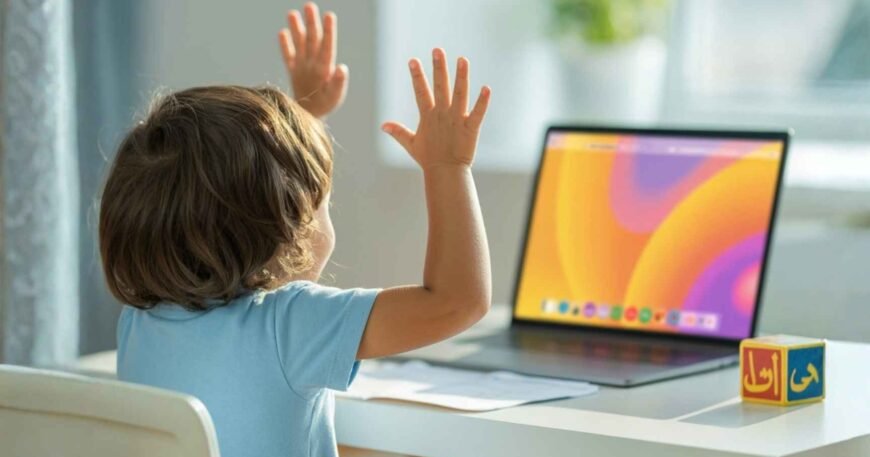
Imagine this: You’ve just finished a long shift in London or New York, your mind is still buzzing with deadlines, and you walk through the door only to face the “Third Shift” the evening routine. You know your 5-year-old needs to start their Noorani Qaida for kindergarten, but the moment the book comes out, the crying starts. You feel that heavy screen-time guilt wondering if adding another 30 minutes of Zoom is fair to them and you’re exhausted from the constant “negotiations” just to get them to sit still.
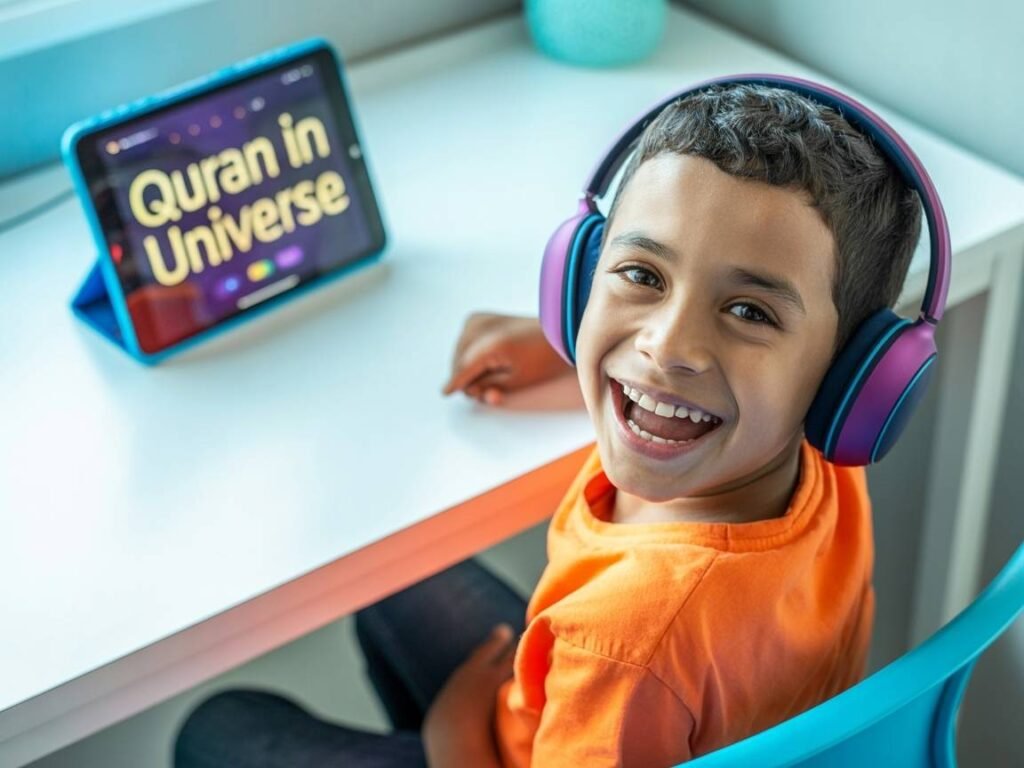
This is the reality for thousands of Muslim parents in Toronto, Sydney, and beyond. You want your child to love the Quran, but you’re terrified that a strict teacher with a language barrier will turn this sacred journey into a chore. At Quran in Universe, we specialize in removing that friction. We don’t just teach letters; we protect your child’s emotional connection to Allah’s words by using child psychology and friendly mentors.
The Kindergarten Struggle: Why Traditional Methods Cause Burnout
The kindergarten struggle is rooted in a mismatch between biology and methodology. A child aged 4 to 6 is in a peak stage of cognitive development, where their brain is a sponge for language, but their body is built for movement. Traditional, “strict” methods that require a child to sit like a statue for 45 minutes ignore this reality.
When a child is forced into a high-pressure environment, they experience burnout. Their “fight or flight” response kicks in, making it physically impossible for them to retain information. This is why they forget the same letter five minutes after learning it, it’s not a lack of intelligence; it’s a presence of stress.
The Trauma of Harsh Teaching
We must address The Trauma of Harsh Teaching. Many parents grew up in environments where a mistake in Makhraj was met with a scolding. In a young child’s mind, the teacher becomes a representative of the Religion.
If that representative is harsh, the child subconsciously associates the Quran with fear and inadequacy. This trauma creates a “spiritual wall” that can take decades to break down. Our friendly mentors act as older siblings, ensuring that every session is filled with positive reinforcement so the child feels safe to make mistakes.
Why Traditional Methods Fail 4-6 Year Olds
The primary reason for failure in the West is the language barrier. If a teacher cannot explain why a letter sounds a certain way in fluent English, the child becomes bored and disconnected. Furthermore, short attention spans are often treated as “bad behavior” instead of a biological fact.
Traditional Strict Madrasah vs. Our Modern Friendly Mentor Method
| Feature | Traditional Strict Madrasah | Quran in Universe Friendly Mentors |
| Communication | Broken English; kids feel misunderstood. | Native-level English for deep connection. |
| Lesson Length | 45-60 minutes (leads to screen fatigue). | 15-20 minute micro-lessons. |
| Teaching Style | Rote memorization and scolding. | Gamified learning and stickers. |
| Teacher Role | Intimidating authority figure. | Friendly mentor (Mentorship style). |
| Tech Usage | Static video call; no interaction. | Interactive whiteboards and games. |
The 5-Step “Tear-Free” Roadmap to Noorani Qaida
1. High-Impact Visual Learning Aids
Kindergarteners don’t see letters; they see shapes and characters. In our online Qaida classes for kids, we don’t use black-and-white text. We use visual learning aids where the letter Jeem might have a “belly” with a “sweet” (the dot) inside it.
Using vibrant colors like a “Royal Blue” for heavy letters and “Soft Pink” for light ones helps with phonetic recognition. When a child in London sees a letter that looks like a familiar toy, their separation anxiety from their play-time vanishes. We turn the Noorani Qaida for beginners into a colorful map rather than a textbook.
2. 20 to 15-Minute Micro-Lessons
The “Secret Sauce” for families in New York or Toronto is the 20 to 15-minute micro-lesson. A 4-year-old’s short attention span is roughly their age plus two minutes. By the time they hit the 20 to 15-minute mark, their ability to absorb new Makharij for beginners drops significantly.
These micro-sessions focus on one single “Win” per day. Whether it’s mastering the sound of Khaa or recognizing three variations of Alif, ending the class while the child is still happy ensures they look forward to tomorrow. This approach eliminates screen-time guilt because the session is purposeful and fast-paced.
3. Gentle Makharij Training
Makharij for beginners is often the point where the tears start. To avoid this, our mentors use auditory engagement techniques. We don’t say “You said it wrong”. Instead, we play “Mirror the Mentor”.
If a child in Sydney is struggling with the letter Ayn, the mentor might make a funny “gargling” sound to show where the sound lives in the throat. This turns a technical correction into a moment of laughter. By the time the child realizes they’ve learned a difficult rule, they’ve already mastered it through play.
4. Positive Reinforcement & Digital Stickers
Positive reinforcement is the engine of cognitive development. In every 1-on-1 private session, our students earn digital stickers for Adab (manners) and Sabr (patience). For a kindergartener, a virtual “Golden Star” is more than a graphic; it’s a signal of safety and success.
We use these rewards to celebrate the effort, not just the accuracy. If a student in Canada tries to pronounce a difficult word, they get a “Bravery Award” sticker. This builds a child who is not afraid to try, which is the most important trait for a long-term Hifz journey.
5. Daily Micro-Habits (The “Deen & Play” Method)
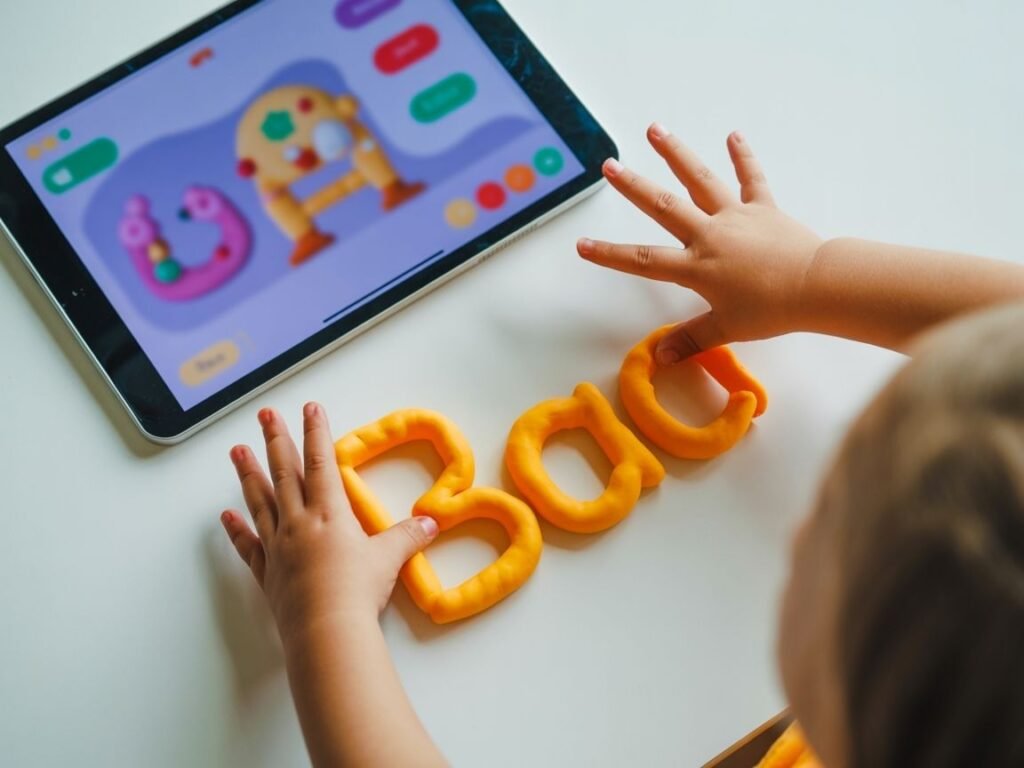
The final step is integrating the Qaida into their Western lifestyle. We teach parents how to use tactile learning at home. This might mean drawing letters in a tray of sand or using playdough to shape the letter Ba.
This ensures that the Noorani Qaida for kindergarten isn’t just something that happens on a screen; it becomes part of their physical world. Our portal allows parents to track these daily micro-habits, making it easy for busy moms in London or New York to stay involved without feeling overwhelmed.
Gamification: Turning Lessons into Adventure
We don’t just “talk” about fun; we build it into the interactive whiteboard.
The “Letter Hunt” Game
One of our favorite engagement hooks is the “Letter Hunt”. The teacher fills the screen with a jumble of colorful letters. The student is given “control” of the mouse (or uses their tablet) to find all the letters with “one dot on the bottom”.
As the child “captures” the Ba letters, the teacher makes a fun sound effect. This turns phonetic recognition into a high-stakes challenge. The child isn’t thinking “I’m studying Arabic”; they’re thinking “I need to find the blue Ba before the timer runs out!”. This is gamified Islamic education that actually works.
A Realistic Daily Schedule for Busy Parents
Managing USA/Canada/Australia timezones while working a full-time job is difficult. Our flexible hours and 15-minute slots are designed specifically for your calendar.
The 15-Minute “Deen & Play” Routine
| Time | Activity | Goal |
| Min 1-3 | Icebreaker / Fun Talk | Bond with the friendly mentor. |
| Min 4-10 | The “New” Letter Journey | Active learning with visual aids. |
| Min 11-13 | Letter Hunt Game | Reinforce memory through play. |
| Min 14-15 | The Reward Ceremony | End with digital stickers and a smile. |
Why “Quran in Universe” is the Best Choice for Your Child
We know you have choices when looking for an online Quran academy near me. However, “Quran in Universe” is built specifically for the unique needs of children in the West.
- Friendly Mentors: We act as mentors, not just instructors, focusing on Character Building (Tarbiyah).
- Safety & Privacy: All sessions are 1-on-1 private sessions with background-checked teachers.
- Native-level Communication: No more “broken English” confusion; our teachers understand your child’s slang, jokes, and culture.
- Affordable Quality: We provide premium EdTech features with affordable Quran academy fees.
Conclusion: Planting the Seeds of Love
Starting Noorani Qaida for kindergarten is the most significant spiritual milestone of your child’s early life. If we do it right, they will grow up seeing the Quran as a source of comfort and joy. If we do it wrong, we risk the tears and tantrums turning into a lifelong avoidance of the Deen.
Don’t let screen-time guilt or a bad past experience stop you. Let our friendly mentors take the burden off your shoulders.
Would you like me to book your child’s Free Trial (No Credit Card required) so they can try the “Letter Hunt” game today?
Frequently Asked Questions (FAQs) for Parents
What is the best age to start Noorani Qaida for children?
Children typically start between 4 to 6 years old. At this stage, cognitive development allows for high phonetic recognition and quick absorption of new languages through visual learning aids and repetition.
How do you keep a kindergartener engaged in an online Quran class?
We replace “strict” teaching with gamified learning. Classes utilize interactive whiteboards, digital stickers, and “Letter Hunt” games specifically designed for a child’s short attention span.
Are your Quran teachers fluent in English?
Yes, our mentors provide native-level communication to eliminate the language barrier common in traditional classes. This ensures children in New York, London, and Sydney understand every lesson clearly without confusion.
How do you handle a child who is scared of strict teachers?
We avoid the “Strict Madrasah” style which often causes burnout. Our friendly mentors focus on positive reinforcement and Character Building (Tarbiyah) to ensure the child feels safe and confident during their 1-on-1 private session.
Do you offer flexible timings for families in the USA or Canada?
We provide classes synced to EST, GMT, and other Western timezones. Our 20 to 15-minute micro-lessons are designed to fit into a busy Western lifestyle without overwhelming the student.
Are the online teachers background-checked for safety?
Safety is our priority. All “Quran in Universe” teachers are background-checked and held to high Ijazah certification standards to ensure a secure learning environment for your child.
How can I track my child’s progress in Noorani Qaida?
Parents receive regular progress reports through our student portal. You can track their mastery of Makharij, Tajweed, and Nazra in real-time.
Related Posts