


Table of Contents
Eid ul Fitr Sunnahs for Kids: Crafting a Joyful Islamic Identity at Home
For Muslim parents raising children in the US, UK, Canada, and other Western countries, creating a vibrant, festive atmosphere for Islamic holidays can sometimes feel like an uphill battle.
When the rest of the neighborhood is treating the day like a regular Tuesday, and you are rushing to get the kids ready before the school bell rings or your morning commute, how do you make Eid truly magical?
It all starts with Islamic parenting that focuses on intention, joy, and the beautiful Prophetic traditions for Eid.
Teaching kids about Eid ul Fitr isn’t just about handing out gifts or wearing nice clothes. It is a profound opportunity to explain the meaning of Eid ul Fitr in Islam: a joyous reward and a “spiritual party” from Allah for all our hard work during Ramadan.
By grounding our celebrations in the Sunnah (the traditions of Prophet Muhammad, PBUH), we can anchor our children’s identities and build lasting family traditions that they will cherish forever.
Before we dive into the deep, spiritual significance of these traditions, here is a quick, scannable checklist to help busy professionals plan their Eid morning seamlessly.
At a Glance: The Eid Morning Sunnah Checklist for Families
| Sunnah / Tradition | Time / Placement | The “Why” for Kids |
| Ghusl (Ritual Bath) | First thing in the morning | Washing away the old, getting fresh for Allah’s party. |
| Eating Dates | Right after dressing up | Breaking the fast officially; showing obedience to Allah. |
| Sadaqah al-Fitr | Before leaving the house | Ensuring every Muslim family has enough to celebrate today. |
| Reciting Takbeerat | In the car / walking to prayer | Praising Allah out loud for guiding us through Ramadan. |
| Eid Salah & Khutbah | Mid-morning at the Masjid | Standing shoulder-to-shoulder with our global Ummah. |
| Different Route Home | Leaving the Eidgah / Masjid | Spreading joy to more areas and greeting different angels. |
| Halal Celebration | The rest of the day | Enjoying our halal rewards, Eidi, and family bonding. |
The Eid Morning Blueprint: 7 Sunnahs to Practice with Your Children
When you are figuring out how to celebrate Eid ul Fitr with family, the best approach is a chronological one. This “Eid Morning Timeline for Families” turns the Sunnah acts of Eid morning into a joyful, step-by-step experience.
1. Wake Up to Purity: Performing Ghusl and Wearing Our Best
The Islamic Concept (What): The very first Sunnah of Eid day is to perform Ghusl (a purifying ritual bath) before heading out to the prayer. Following this, it is a Sunnah of wearing new clothes, or simply the best, cleanest, and most beautiful modest garments you own.
The Importance (Why): Islam places a massive emphasis on physical and spiritual purity. The Prophet Muhammad (PBUH) loved pleasant scents and cleanliness. When we dress beautifully for Eid, we are outwardly expressing our inner Gratitude (Shukr) to Allah for His blessings.
Practical Tips for Busy Parents (How):
- The Night Before: Lay out everyone’s clothes, shoes, and accessories the night before. This eliminates morning stress and builds incredible anticipation.
- The Kid-Friendly Script: Tell your children, “Today we are getting dressed up for a very important VIP meeting! We are going to the Masjid to thank Allah, so we want to look and smell our absolute best for Him.”
- Engage the Senses: Allow your children to pick out a special, non-alcoholic perfume (attar) to wear. Making these small sensory memories helps solidify the joy of Eid in their minds.
2. A Sweet Start: Eating Dates Before Leaving the House
The Islamic Concept (What): It is an established Sunnah to eat an odd number of Dates (Khajoor), like one, three, or five, before leaving the house for the Eid Salah.
The Importance (Why): This is the ultimate, physical proof that Ramadan has concluded. Fasting on Eid day is strictly forbidden. By consuming this specific Sunnah food for Eid early in the morning, we are showing immediate obedience to Allah’s command to break our fast and celebrate.
Practical Tips for Busy Parents (How):
- The Toddler Counting Game: If you are looking for Islamic activities for toddlers on Eid, this is a perfect one. Have them count out the dates. “Let’s count: one, two, three! We need an odd number just like the Prophet (PBUH) loved!”
- The Kid-Friendly Script: “During Ramadan, Allah asked us to wait until sunset to eat. Today, Allah is telling us, ‘Eat right now and enjoy!’ Eating these dates shows Allah we are listening to Him.”
- Allergy Alternatives: If your child does not like dates or is allergic, you can substitute it with something naturally sweet, like a small piece of fruit or honey, explaining the intention behind the sweetness.
3. Teaching Empathy: Giving Sadaqah al-Fitr (Zakat al-Fitr)
The Islamic Concept (What): What is Sadaqah al-Fitr for kids? It is a mandatory charity given before the Eid prayer to purify any shortcomings in our fasting and to provide food for the less fortunate.
The Importance (Why): True Islamic celebrations are never selfish. We belong to a global Ummah (community). Giving this charity ensures that families facing financial hardship can also enjoy a beautiful, dignified Eid feast. It teaches children that our joy is incomplete if our brothers and sisters are going hungry.
Practical Tips for Busy Parents (How):
- Make it Physical: In our digital age, it is incredibly easy for parents to pay Zakat al-Fitr online via credit card. While this is valid, it is invisible to children. Withdraw physical cash. Let your children physically hold the money and place it into the donation box at the Masjid.
- The Kid-Friendly Script: “Allah gave us so much delicious food for our Eid party. We are giving this money so that another family, somewhere else in the world, can buy a yummy Eid breakfast for their kids today, too.”
Nurture Their Islamic Foundation Year-Round
Nurturing a deep love for Islamic values like empathy and charity doesn’t stop when Ramadan ends. If you want to help your child build a continuous, lifelong bond with the Book of Allah, we are here to help. Claim your 1-Week Free Trial of engaging, 1-on-1 online classes at Quran in Universe today. Let’s make learning the Quran a joyful habit!
4. Filling the Air with Praise: Reciting the Eid Takbeerat
The Islamic Concept (What): The Takbeerat ul Eid meaning revolves around magnifying and praising Allah. From the night before Eid until the Imam begins the Eid prayer, it is highly encouraged to repeatedly chant the Takbeer.
The Importance (Why): It is a vocal, public declaration of our faith and gratitude. When we recite the Takbeerat, we are filling our homes, our cars, and the streets with the remembrance of Allah.
Practical Tips for Busy Parents (How):
- Learn the Words: Many parents search for the exact Eid takbeerat words for children. Here is the simple version to teach them:
- Allahu Akbar, Allahu Akbar, La ilaha illallah. Allahu Akbar, Allahu Akbar, wa lillahil-hamd.
- (Allah is the Greatest, Allah is the Greatest. There is no deity worthy of worship but Allah. Allah is the Greatest, Allah is the Greatest, and to Allah belongs all praise.)
- The Car Ride: For families in the US, UK, or Canada, the car ride to the Masjid is the perfect time for this. Turn off the radio and have a family Takbeer sing-along. Let the kids take turns leading the chant. It builds incredible, joyful energy before you even arrive at the prayer.
5. Standing Together: Attending the Eid Salah and Khutbah
The Islamic Concept (What): Attending the Eid Salah (prayer) and listening to the subsequent Khutbah (sermon) is the focal point of the morning. This takes place at the local Masjid or an outdoor Eidgah (open prayer ground).
The Importance (Why): This is where the magic of the community happens. Seeing thousands of Muslims from different backgrounds, all dressed beautifully and bowing to Allah together, instills a profound sense of pride and belonging in a child’s heart.
Practical Tips for Busy Parents (How):
- Prep Them for the Prayer: The Eid prayer is unique. It has extra Takbeers (raising the hands and saying Allahu Akbar) in the first and second Rak’ah. Explain this to your kids beforehand so they aren’t confused and trying to bow early!
- Surviving the Khutbah: Let’s be honest, sitting still for a sermon is tough for toddlers. Pack a small, quiet “Eid Bag” with a halal coloring book, some crayons, or a quiet puzzle. Teach them the etiquette of the Masjid (low voices, sitting respectfully) while granting them a little grace.
6. The Sunnah Scavenger Hunt: Taking a Different Route Home
The Islamic Concept (What): When making Eid special for children, lean into the quirky, beautiful Sunnahs. The Prophet Muhammad (PBUH) had a specific habit: he would take one route to the Eid prayer and a completely different route to return home.
The Importance (Why): Scholars explain that doing this allowed the Prophet (PBUH) to greet a larger number of people, spread joy to different parts of the city, and have the very paths of the earth witness his worship on the Day of Judgment.
Practical Tips for Busy Parents (How):
- Turn it into a Game: This is the perfect opportunity for “Sunnah-to-Fun” integration. Tell your kids, “We are going on a Sunnah Scavenger Hunt! We have to find a brand new way home.” * Play ‘I Spy’: While driving or walking the new route, play “I Spy” looking for other Muslims to roll down the window and yell “Eid Mubarak!” to. This is especially impactful in Western countries, as it teaches kids to be proud and visible in their joyous faith.
7. Spreading Joy: Eidi, Family Bonding, and Halal Entertainment
The Islamic Concept (What): After the spiritual obligations of the morning are complete, the rest of the day is dedicated to family bonding, feasting, and halal entertainment.
The Importance (Why): Islam is not a religion devoid of fun. In fact, there is a famous Hadith where the Prophet (PBUH) allowed young girls to sing and play the Duff (a traditional drum) in his home on Eid. When Abu Bakr (RA) tried to stop them, the Prophet (PBUH) said, “Leave them, for every nation has its festival, and this is our festival.”
Practical Tips for Busy Parents (How):
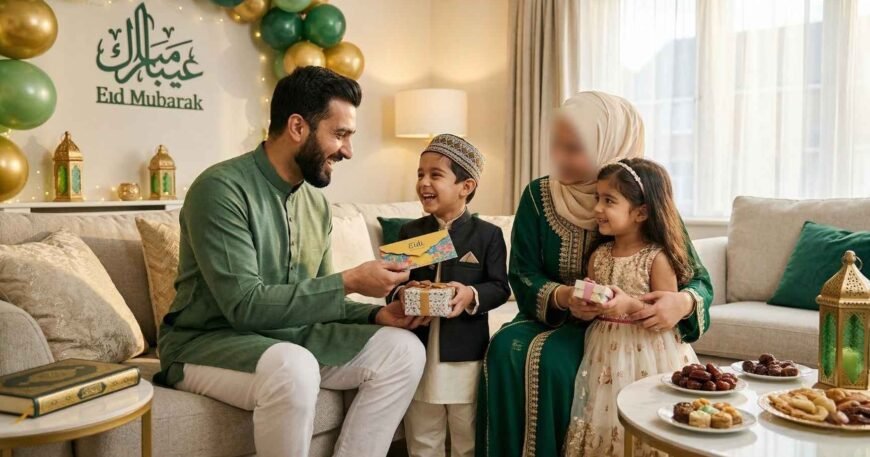
- The Tradition of Eidi: Giving Eidi (cash or gifts) to children is a beautiful cultural tradition that perfectly aligns with the Islamic encouragement of gift-giving to increase love. Wrap the gifts beautifully to make them feel just as special as their peers who celebrate secular holidays.
- Create Your Own Traditions: If you lack extended family nearby, create your own halal Eid celebration ideas. Go to a theme park, have a massive indoor picnic, decorate the house wildly with balloons, or bake a special, once-a-year dessert together. Make your home the ultimate hub of joy.
Beyond Eid: Keeping the Spirit of Ramadan Alive in Shawwal
The excitement of Eid ul Fitr can sometimes lead to a post-Ramadan slump. We transition from a month of intense spirituality, daily Quran reading, and Taraweeh prayers back into the busy grind of secular work and school life in the month of Shawwal.
It is crucial to remind our children of the Eid ul Fitr history for kids: Eid is essentially a celebration of the month in which the Quran was revealed. The absolute best way to honor that celebration is by ensuring that the Quran does not go back on the highest shelf to collect dust for the next eleven months.
We must strive for keeping Ramadan habits after Eid. Whether it is continuing to fast six days of Shawwal, praying together as a family, or dedicating just ten minutes a day to Islamic learning, continuity is key.
Keep the Quranic Connection Strong!
Don’t let the beautiful habits your child built in Ramadan fade away. At Quran in Universe, we specialize in making Quran learning interactive, joyful, and highly accessible for kids living in the West. Give your child the gift of continuous spiritual growth. Start their journey today with our 1-Week Free Trial for 1-on-1 Online Quran Classes for Kids, absolutely no commitment required!
Frequently Asked Questions (FAQ) About Eid ul Fitr for Kids
What are the main Sunnahs of Eid ul Fitr?
The main Sunnahs of Eid ul Fitr include performing Ghusl (a purifying ritual bath), wearing your best and cleanest clothes, eating an odd number of dates before leaving the house, reciting the Takbeerat loudly, giving Sadaqah al-Fitr, attending the Eid Salah, and returning home via a different route.
How do you easily explain Eid ul Fitr to a young child?
You can easily explain Eid ul Fitr to a young child by describing it as a beautiful reward from Allah. Tell them, “Because we worked hard to fast and be kind during Ramadan, Allah gave us Eid as a special party to eat, play, wear nice clothes, and celebrate together.”
What did the Prophet (Peace Be Upon Him) do on the morning of Eid?
On the morning of Eid ul Fitr, Prophet Muhammad (PBUH) would wake up early, perform Ghusl, put on his most beautiful garments, and eat an odd number of dates to symbolize the end of fasting. He would then walk to the Eidgah (prayer ground) while continuously reciting praises to Allah (Takbeerat).
Is it Sunnah to eat dates before the Eid prayer?
Yes, it is a highly recommended Sunnah to eat an odd number of dates (such as 1, 3, or 5) before leaving for the Eid ul Fitr prayer. This specific act physically demonstrates obedience to Allah’s command to officially break the fast.
How can Muslim families in the West make Eid special for kids?
Families in the US, UK, and Canada can make Eid special by requesting the day off from school or work, attending the local Masjid for prayer, decorating their homes, exchanging Eidi (gifts), and organizing halal family gatherings to ensure their kids feel a strong, joyous Islamic identity.
Related Posts