



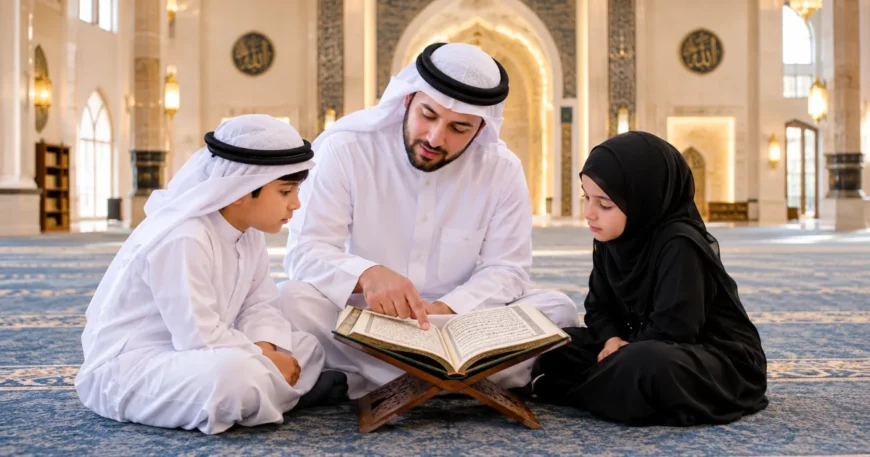
Navigating modern parenting often comes with the challenge of helping children manage daily stress, academic pressure, and sudden emotional setbacks. By actively teaching Surah Al-Inshirah lessons at home, parents can help children build inner strength, emotional stability, and long-term patience from an early age. When young minds understand that ease naturally accompanies every hardship, their perspective shifts away from anxiety toward hope, confidence, and faith.
Children frequently feel overwhelmed when facing minor failures or difficult social situations. Surah Al-Inshirah provides a timeless spiritual framework that enables parents to guide their kids through life’s ups and downs with calm reassurance. Grounding children in Quranic wisdom helps soothe their hearts and minds, allowing their problem-solving skills and mental resilience to develop in a balanced, healthy manner.
Fostering a supportive, spiritually enriching atmosphere at home remains a primary goal for every Muslim family. Instilling divine hope and emotional balance plays a crucial role in shaping a child’s lifelong character. Through thoughtful Islamic parenting strategies and consistent daily reflections, parents can empower their children to face the emotional demands of today’s fast-paced world with true confidence.
How Surah Al Inshirah Lessons for Kids Build Inner Strength?
Children frequently encounter daily hurdles, ranging from difficult school assignments and social anxieties to the frustration of failing at a new skill. When parents introduce Surah Al-Inshirah lessons for kids, they offer a comforting divine framework that transforms how young minds view adversity. The powerful message within this Surah teaches children that discomfort and hardship are never permanent, and that relief is always intertwined with struggle. By reflecting on how Allah expanded the Prophet’s heart and lifted his heavy burdens, kids learn to internalize a sense of deep hope and emotional grounding, empowering them to process difficult emotions without feeling helpless or defeated.
Building lasting fortitude requires more than just telling children to be brave; it demands teaching them how to reframe their mental stress through faith. By making these Quranic reflections a regular part of home conversations, parents help children develop a growth mindset rooted in spiritual trust. Kids who understand the core principles of Surah Al-Inshirah learn to pause, breathe, and trust that ease is already on its way whenever they face overwhelming moments. This continuous practice nurtures courage, reduces emotional fragility, and equips young learners with the quiet inner strength needed to navigate life’s unexpected challenges with grace.
Raising Confident Muslim Children Through Surah Al-Inshirah Verses
| Verse Focus & Arabic Terms | Practical Application at Home | Confidence Benefit |
| Ayah 1: Expansion of Heart (أَلَمْ نَشْرَحْ لَكَ صَدْرَكَ) | Initiate calm conversations when your child feels overwhelmed, teaching them to ask Allah for inner peace and clarity. | Essential for raising confident muslim children who feel emotionally secure and supported. |
| Ayah 2: Lifting Burdens (وَوَضَعْنَا عَنكَ وِزْرَكَ) | Help your child break large academic projects or emotional worries into smaller, manageable steps to lighten their mental load. | Protects young minds from feeling helpless under heavy academic or personal expectations. |
| Ayah 3: Removing Heavy Weight (الَّذِي أَنقَضَ ظَهْرَكَ) | Teach children that expressing their worries through Du’a lifts the heavy emotional weight that stresses their minds. | Builds resilience and emotional stability when facing overwhelming situations. |
| Ayah 4: Elevating Status (وَرَفَعْنَا لَكَ ذِكْرَكَ) | Remind your child that true honor comes from noble character and Allah’s approval rather than peer validation. | Nurtures authentic self-worth and shields children from social pressure and insecurities. |
| Ayah 5: Ease with Hardship (فَإِنَّ مَعَ الْعُسْرِ يُسْرًا) | Guide children to find positive lessons and silver linings whenever they face mistakes, failures, or minor setbacks. | Fosters an optimistic mindset that turns everyday failures into valuable learning opportunities. |
| Ayah 6: Certainty of Relief (إِنَّ مَعَ الْعُسْرِ يُسْرًا) | Reassure your child during stressful exam periods that genuine effort is always followed by Allah’s relief and success. | Strengthens patience and perseverance, allowing children to stay steady through challenging moments. |
| Ayah 7: Continuous Effort (فَإِذَا فَرَغْتَ فَانصَبْ) | Establish structured daily routines that balance schoolwork, creative play, and Quran reflection in a disciplined manner. | Instills strong self-discipline and focus, helping children manage their time with purpose. |
| Ayah 8: Turning to Allah (وَإِلَىٰ رَبِّكَ فَارْغَب) | Encourage kids to make heartfelt Du’a whenever they experience self-doubt or peer pressure, relying solely on Allah. | Anchors self-worth in faith, ensuring children stay resilient against external pressure. |
Effective Islamic Parenting Strategies to Manage Childhood Anxiety
Modern parenting requires effective methods to nurture emotional stability and resilience in children facing modern pressures. By combining Quranic principles with practical guidance, parents can create a comforting environment that eases stress and builds lifelong mental strength. Utilizing thoughtful islamic parenting strategies helps children process their anxieties through faith, love, and structured home support:
- Encourage children to turn to Allah whenever they feel anxious or overwhelmed, using simple remembrances like Astaghfirullah and SubhanAllah as immediate emotional anchors that help soothe their nervous system and bring instant peace.
- Model gentle communication inspired by the Sunnah of the Prophet Muhammad (PBUH) so children know their feelings can be expressed at home without judgment, naturally decreasing their baseline anxiety levels.
- Remind children of the core message in Surah Al-Inshirah whenever they face school pressure or personal challenges, teaching them that ease accompanies every hardship so they view temporary struggles with patience and hope.
- Create a clear daily structure for prayers, meals, homework, and bedtime to give children a strong sense of security, predictability, and emotional stability.
- Shift the focus away from perfect grades or winning toward sincere intention and honest effort (Juhd), reminding children that Allah rewards their dedication rather than just the final result.
- Avoid dismissing a child’s fears as silly or unimportant, validating their feelings to reassure them that experiencing worry is normal while guiding them toward relying on Allah for inner strength.
- Demonstrate patience (Sabr) and gratitude (Shukr) during stressful moments, as children learn emotional regulation primarily by observing how their parents handle difficult situations.
- Incorporate outdoor play and regular physical exercise into your family routine to reduce stress hormones and help children regulate their emotions away from screens.
- Spend a few minutes before bedtime discussing three positive things from the day to thank Allah for, shifting a child’s mental focus away from worries and toward contentment.
- Teach children that asking a trusted adult for help when feeling overwhelmed is a sign of wisdom, and walk them through step-by-step problem-solving techniques so they feel equipped to handle challenges.
Teaching Emotional Balance in Islam with Surah Al-Inshirah
In an era filled with sensory overload, academic expectations, and social comparisons, teaching emotional regulation to children has become a vital responsibility for every Muslim parent. Islam offers a profound framework for maintaining internal harmony, emphasizing that true peace originates from an heart anchored in divine connection. Surah Al-Inshirah serves as a masterclass in emotional resilience, illustrating how spiritual grounding enables an individual to process distressing emotions, overcome disappointment, and maintain composure during unpredictable situations. When parents integrate these Quranic principles into daily conversations, children learn that emotional turbulence is temporary and can be effectively managed through faith and patience.

By incorporating structured learning resources and Quranic reflections at home, parents can help children cultivate emotional balance in islam with greater clarity and confidence. Educational platforms like Quran In Universe emphasize the importance of blending traditional Islamic wisdom with child psychology, making sacred teachings accessible and practical for modern families. Through guided reflections on Surah Al-Inshirah, children begin to realize that emotional health is deeply connected to spiritual mindfulness. This holistic approach empowers young learners to recognize their feelings without being overwhelmed by them, fostering a resilient mindset that transforms daily stress into opportunities for spiritual growth.
Simple Quranic Mindfulness for Kids Using Surah Al-Inshirah Reflections
Introducing mindfulness through a Quranic lens allows children to cultivate presence, self-awareness, and emotional stability grounded in faith. Grounding daily habits in Surah Al-Inshirah teaches young minds to connect their breathing, thoughts, and feelings directly to Allah’s guidance. By turning the timeless verses of this Surah into simple daily habits, parents can nurture a calming routine that helps kids navigate modern distractions. Here are some practical ways to practice quranic mindfulness for kids using reflections from Surah Al-Inshirah:
- Heart Expansion Breathing: Teach children to place their hands over their hearts and take slow, deep breaths whenever they feel anxious, reminding them that Allah expands their hearts with peace and clarity.
- Lifting Emotional Burdens: When children feel overwhelmed by schoolwork or peer stress, guide them to make sincere Du’a and talk through their worries to experience how Allah lifts heavy loads.
- The Ease Finder Routine: During difficult moments, pause and ask your child to identify two positive things around them, training their minds to notice the relief that accompanies every hardship.
- Mindful Sensory Grounding: Help your child name things they can see, touch, and hear around them to bring their focus back to the present moment whenever stress takes over.
- Post-Task Transition Pauses: Establish a simple practice of taking a two-minute quiet break between finishing one activity and starting another to keep young minds calm and uncluttered.
- Dedicated Divine Focus: Encourage children to give their complete focus to whatever task they are doing, viewing honest effort as a form of worship that pleases Allah.
- The Anchor Du’a: Teach your child to repeat a simple phrase like “Ya Allah, I trust You with my worries” during moments of self-doubt to instantly regain inner peace.
- Mindful Quran Recitation: Guide children to recite Surah Al-Inshirah slowly and smoothly, focusing on the rhythm and meaning rather than rushing through the verses.
- The Gratitude Jar Practice: Keep a family jar where kids write down daily moments of ease and happiness on small paper slips to build a habit of noticing continuous blessings.
- Nature Walking and Reflection: Take short walks outdoors to observe trees, sky, and birds while discussing how nature smoothly transitions from rain and storms into calm weather under Allah’s guidance.
- Mindful Bedtime Reflections: Spend three quiet minutes before sleep reviewing the day, thanking Allah for the good moments, and letting go of any lingering worries with full trust in Him.
- Emotional Weather Check-ins: Ask your child to describe their current emotion as weather, like sunny or stormy, reminding them that tough feelings are temporary state changes that will pass.
Integrating Quran Reflection into Your Daily Muslim Family Routine
Making Quran reflection a consistent part of family life does not require hours of complex study; rather, it thrives on small, intentional moments shared together. In a fast paced world filled with modern distractions, creating a structured habit around sacred scripture provides a stabilizing anchor for both parents and children. Establishing a regular daily time, such as right after Fajr prayer or immediately before bed, allows the family to gather, recite a few verses, and reflect on their practical meanings. This steady engagement transforms Quranic study from a passive chore into an active, heart centered family tradition that strengthens emotional bonds and builds a shared spiritual identity.
To maintain consistency amidst demanding work and school schedules, parents must adopt flexible strategies that make learning feel accessible and uplifting. Exploring verses alongside related themes, such as examining Surah Ad-Duha English Translation: Finding Peace in a Busy Schedule, helps families realize how directly divine revelation addresses daily stress, burnout, and emotional fatigue. When children see that the Quran speaks directly to their everyday feelings of being overwhelmed or distracted, their relationship with the scripture naturally deepens. Discussing these comforting translations over dinner or during car rides transforms quiet moments into meaningful opportunities for spiritual rejuvenation and mindfulness.
Ultimately, integrating daily Quranic reflection builds a resilient home environment where faith serves as the primary lens for navigating life’s challenges. As children grow up practicing regular reflection, they internalize a proactive coping mechanism that serves them far beyond childhood. They learn to turn to Allah’s word for guidance, comfort, and emotional clarity whenever they encounter adversity or self-doubt. By weaving these sacred reflections seamlessly into the fabric of daily domestic routines, parents gift their children a lifelong foundation of faith, emotional stability, and inner peace.
Why Interactive Online Quran Classes for Kids Help Build Long-Term Character?
Enrolling children in interactive digital learning platforms like Quran In Universe creates a structured space where timeless Islamic values seamlessly integrate with modern educational methods. When children in the United Arab Emirates connect with qualified tutors through one-on-one virtual sessions, they receive personalized mentorship that nurtures patience, discipline, and strong moral integrity. Through guided discussions on Quranic themes, young learners discover how to apply Islamic ethics directly to their daily decision-making and relationships.
Beyond individual instruction, virtual learning environments broaden a child’s perspective by connecting them with a supportive community of peers. A young student living in Saudi Arabia can participate in engaging group reflections that emphasize core social virtues like empathy, active listening, and mutual respect. These collaborative sessions help children solidify their religious identity and build essential interpersonal skills, giving them the emotional confidence required to navigate modern social dynamics with ease.
Finally, the inherent adaptability of digital instruction ensures that spiritual growth remains a consistent and enjoyable habit without causing burnout. Families living in Qatar often find that flexible online scheduling allows Quranic studies to fit harmoniously alongside schoolwork and family life. As children achieve learning milestones at their own natural pace and receive consistent encouragement, they develop genuine self-reliance and a lifelong appreciation for Quranic guidance.
Frequently Asked Questions About Surah Al-Inshirah Lessons
What are the key Surah Al-Inshirah lessons for kids facing daily stress?
Surah Al-Inshirah teaches children that emotional relief begins with opening their hearts to Allah, trusting Him with their burdens, and recognizing that relief is always attached to difficulty. By practicing deep reflection on these verses, kids learn that stress is temporary and can be transformed into emotional strength through faith and prayer.
How does Surah Al-Inshirah help children overcome academic anxiety?
The Surah reminds children that Allah actively lifts heavy burdens (Wizr) that weigh down their minds. When facing tough exams or heavy homework, kids are taught to do their best while trusting Allah for the result. This mindset shifts focus away from perfection pressure toward calm, dedicated effort.
How can parents explain the meaning of Surah Al-Inshirah to young children?
Parents can use simple, relatable analogies. For instance, explaining “expansion of the heart” as taking a deep breath of calm when feeling scared, or comparing “ease after hardship” to how a bright sunny day follows a stormy night. Using everyday examples helps young children understand divine principles naturally.
What role does Surah Al-Inshirah play in teaching emotional resilience to Muslim kids?
It acts as a complete framework for emotional stability. The Surah teaches children to pause, seek comfort in prayer during distress, stay disciplined in their daily routine, and continually turn to Allah whenever self-doubt arises, building a lifelong foundation of faith-based resilience.
How can we use Surah Al-Inshirah reflections to manage childhood anger and frustration?
When children experience anger or frustration, parents can encourage them to recite the opening verse (Alam Nashrah) while practicing slow, deep breathing to expand their chests and calm their nervous system. Reflecting on Allah’s promise of ease helps children process strong feelings without reacting impulsively.
How does Surah Al-Inshirah teach children to find ease after hardship?
By repeating the phrase “Inna ma’al ‘usri yusra” twice, the Surah emphasizes that ease does not just come after hardship, but accompanies it. Parents can teach kids to actively search for small blessings and positive takeaways during challenging moments, training their minds to stay optimistic.
What are practical ways to integrate Surah Al-Inshirah into a daily Muslim family routine?
Families can incorporate short, daily reflections by reviewing one verse together after Fajr or Maghrib prayer, keeping a family gratitude jar, or reciting the Surah during bedtime routines while discussing one moment of ease experienced during the day.
How does memorizing Surah Al-Inshirah impact a child’s mental well-being and focus?
Reciting and memorizing this soothing Surah slows down a child’s breathing and heart rate, reducing mental clutter. Internalizing its meaning gives kids an immediate internal anchor to turn to during moments of stress, boosting overall mental clarity and emotional focus.
Can interactive online Quran classes help kids better understand Surah Al-Inshirah?
Yes. Platforms like Quran In Universe connect children with qualified tutors through engaging, one-on-one virtual sessions. Tutors break down complex Quranic concepts into child-friendly life lessons, helping kids understand how to apply the wisdom of Surah Al-Inshirah directly to their daily lives.
How can parents use Surah Al-Inshirah to build long-term confidence in their children?
By reflecting on verse 4 (“And raised high for you your repute”), parents can teach children that true self-worth comes from noble character and Allah’s love, rather than peer approval. Anchoring their confidence in divine validation protects children from peer pressure and social anxieties.
Related Posts